

A View from the Bridge - July 2026
The BOE policy rate remained at 3.75%, the developing drought in policy changes mirroring that of the UK’s weather patterns in 2026. The number of dissenters in favour of a hike increased by one (6-3) from the prior meeting, with Catherine Mann unsurprisingly supporting a hike explicitly linked to the resumption of hostilities in the Middle East, which was flagged at the previous meeting.
Otherwise, it was a more dovish forecast round than market pricing had implied, with 1–3-year rates down 10bp on the day. The softer than expected inflation outturns (food, services) since April (June CPI 2.6% vs 3.0% y/y forecast) along with moderating wage growth, were given particular emphasis by Governor Bailey. In his view the BoE more room to accommodate the expected increase in inflation if energy prices remain elevated heading into the autumn. Deputy Governor Claire Lombardelli emphasised that underlying activity remains weak with quarterly annualised growth still sub-trend. Additional weight was given to margin compression being experienced by producers absorbing higher costs, which is in stark contrast to the pass-through and margin expansion seen when demand was elevated and supply was constrained in the aftermath of the pandemic.
This means that the BOE view the domestic disinflation process continuing over the coming months, bolstered by softer goods prices stemming from the change in global tariffs, which have caused a diversion of cheaper goods to the UK. For the time being these factors are offsetting the impact of higher energy prices and putting the bank under less immediate pressure to raise the policy rate, given the risk premium that has been embedded in market rates since the start of the US/Iran conflict. This suggests the MPC is very comfortable with rates being on hold for a prolonged period but remaining ready to act IF the adverse scenario of higher and more persistent second round effects materialise. As Governor Bailey said, “there is nothing to suggest the MPC is edging towards a hike”.
That said, the outlook remains highly uncertain, such that a 3.75% policy rate in 6-9 months’ time could be the least likely scenario even though it is an “unstable equilibrium”. This is because a resumption of rate cuts or the need for hikes is arguably occupying a bigger but equal space either side of the scenario distribution, despite a world that is experiencing economic shocks from multiple directions in terms of monetary policy effects (e.g. fiscal policy, AI, El Nino, tariffs, geopolitics).
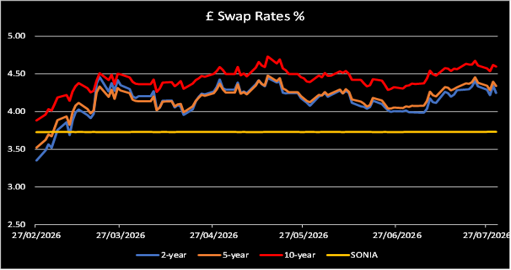
At 4.25% 2-year swaps are right in the middle of the range established since the initial strikes on Iran in the early spring (4.60% high, 3.96% low). On the contrary, 10-year swaps are nearer the high end of their recent ranges exhibiting more of a term premium. These tenors are more dependent on fiscal policy and global risk factors (UK Gilts, US Treasuries, German Bund yields and JGBs remain close to multi-year highs).
PegasusCapital - 30/07/2026
Whitepapers / Articles
A View from the Bridge - September 2026
PegasusCapital - 18/09/2026
